Speed Queen Appliance Repair in San Diego
Speed Queen builds washers and dryers for laundromats — steel transmissions, stainless tubs, and motors rated for decades of daily commercial use — then sells the same hardware to homeowners who want laundry that lasts. We service that commercial-grade engineering to the standard it was built to, across San Diego, with a flat $90 diagnostic applied to the repair and a 90-day guarantee.
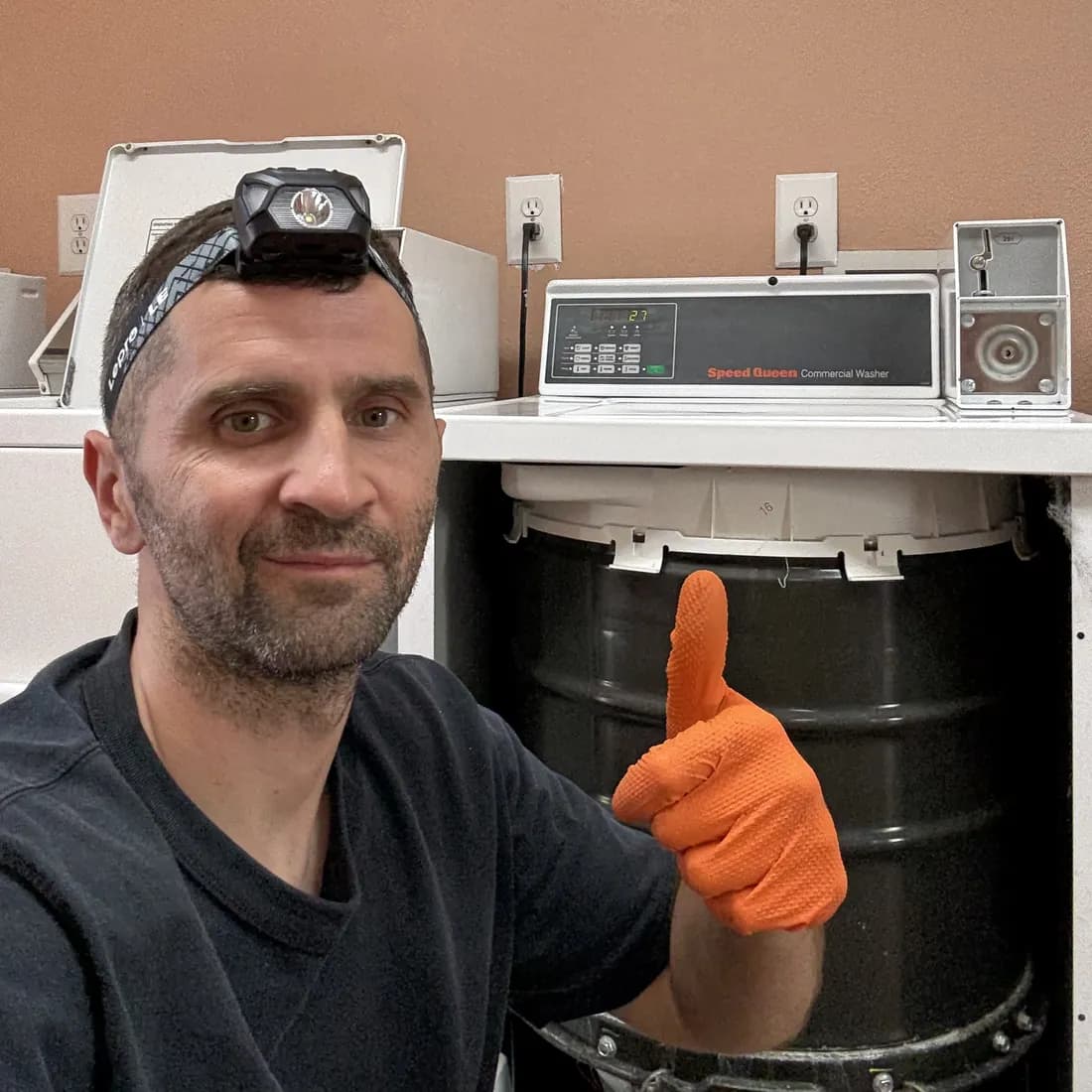
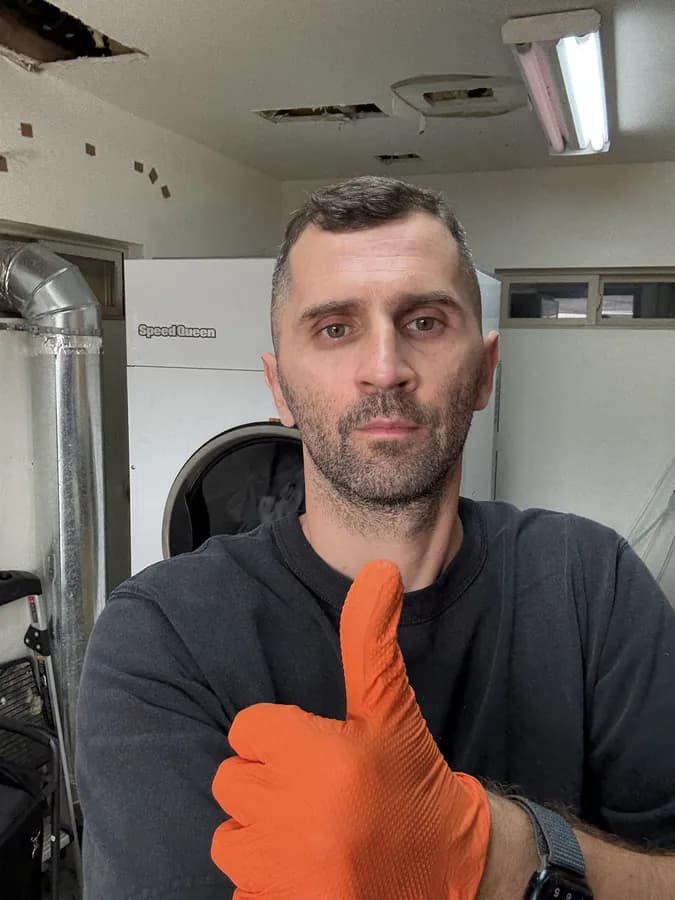
Meet the team behind every repair.
Why a Speed Queen is built to be repaired, not replaced.
Speed Queen has built laundry equipment in Ripon, Wisconsin since 1908, and its residential machines are essentially its commercial ones in a home-sized cabinet — the same cast-alloy transmission, the same stainless tub, the same motor engineered for tens of thousands of cycles in a coin-op laundromat. If you paid more for a Speed Queen, you paid for hardware meant to outlast the room it sits in. When you search “speed queen repair near me,” what you want is a technician who treats it as the commercial unit it is.
Servicing one takes a different approach than a typical residential washer. The classic top-loaders run a transmission, clutch, and mechanical timer with real torque tolerances; the newer TR and TC series swap the timer for an electronic control board with its own diagnostic codes; the front-loaders use a direct-drive motor and a balanced suspension. We carry that range of training and pull genuine parts straight from the authorized distributor — from a lid switch to a full transmission — instead of fitting the aftermarket substitutes that undo the brand's whole point.
Most of our Speed Queen calls are homeowners with a machine 15, 20, even 30 years old that's worth keeping. The durable core — transmission, tub, motor — rarely fails first; it's the wear parts (lid switches, belts, boot seals, timers) that need replacing on the normal residential clock. We do exactly that, and after the flat $90 diagnostic you get a clear written quote with real numbers and no pressure, since a worn part on a sound Speed Queen is a straightforward repair.
We service Speed Queen washers and dryers the way a laundromat tech would — and we see them most in the practical, heavy-laundry households of Poway, Mira Mesa, and Rancho Santa Fe. We've kept them running across San Diego County since 2019, every repair carrying our 90-day parts-and-labor guarantee.
Reference: Official Speed Queen residential lineup and support
The Speed Queen laundry line, serviced like commercial.
Top-Load Washers
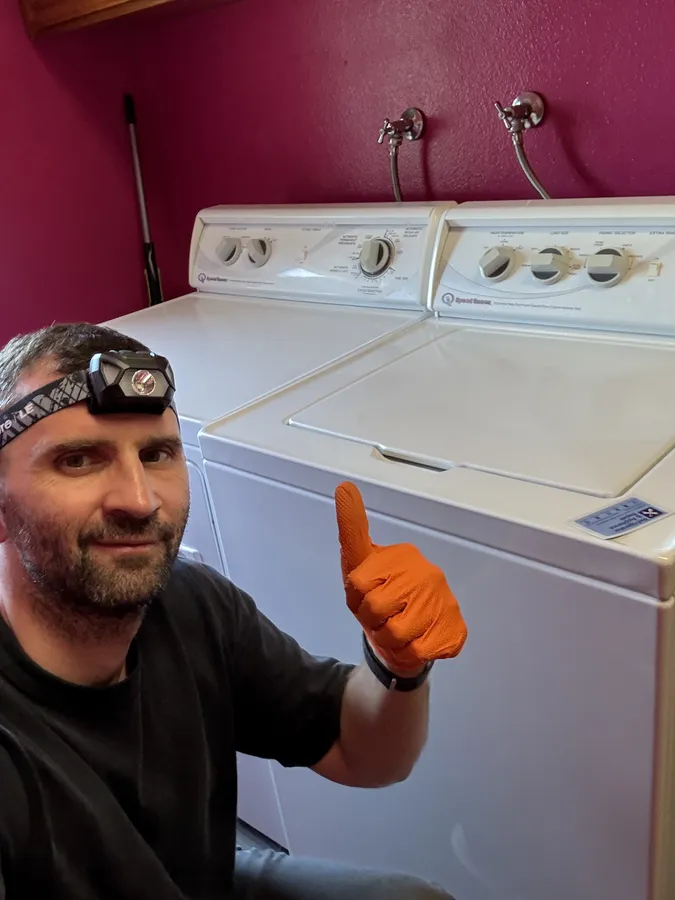
Classic mechanical-timer models and the newer TR and TC electronic series. Transmission and clutch service, mechanical timer rebuilds, lid switches, agitator couplings, and suspension dampers.
Front-Load Washers
FF and FR direct-drive models. Door boot seals, drum bearings, suspension dampers, drain pumps, and electronic control boards — the laundromat-duty front-load platform, serviced to spec.
Gas & Electric Dryers
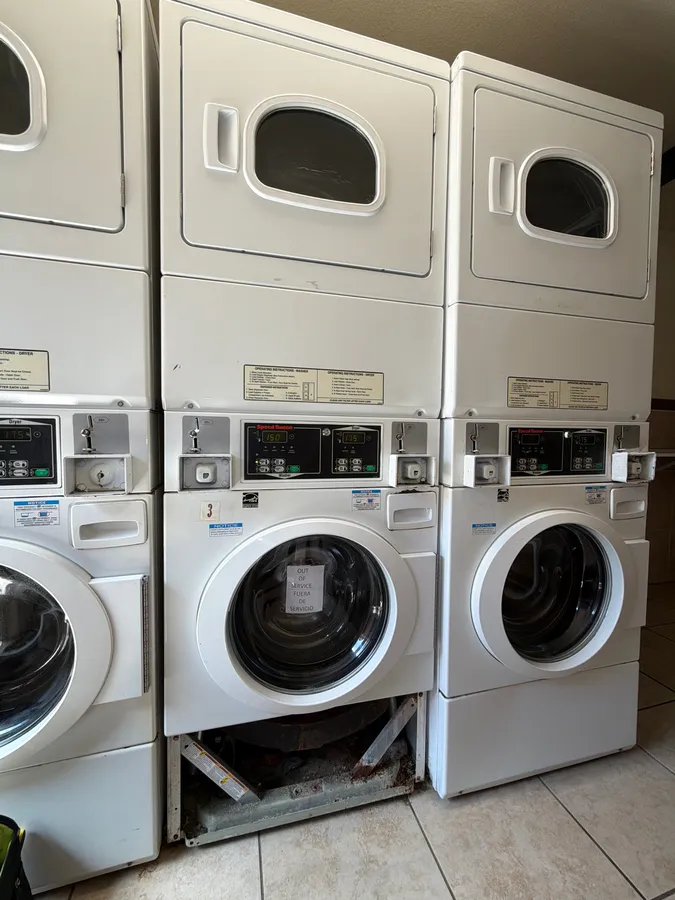
Stand-alone and stacked dryers. Heating elements and igniters, thermal fuses, drum rollers and idler bearings, drive belts, and moisture sensors — built on industrial bearings that wear after years of home use.
What faults does Speed Queen laundry develop?
| What goes wrong | Likely cause & the fix |
|---|---|
| Top-Loader Fills but Won't Agitate or Spin | On a Speed Queen top-loader this is almost always the lid switch — the safety contact that has to close before the machine will run. We meter the switch, replace it with a genuine part, and check the harness. It's usually a same-visit fix, and we confirm a full cycle before leaving. |
| Mechanical Timer Skipping or Stalling | The older mechanical-control models run a timer with dozens of contacts that sequences the whole wash. When cycles skip or won't advance, that timer is usually the cause — and because Speed Queen still manufactures it, we can rebuild or replace it with a genuine unit rather than condemn the machine. |
| Transmission or Clutch Wear | When the lid switch is fine but the tub still won't agitate or spin, the next suspects are the drive belt, the agitator coupling, or the transmission and clutch. We test them in order — belt, coupling, transmission output — and the cast-alloy transmission itself rarely fails first, so the fix is usually a peripheral part. |
| Tub Banging or Walking on Spin | Speed Queen top-loaders ride on a set of damping rods and a snubber pad. When one rod weakens or the pad wears, the tub goes unbalanced and the machine bangs or walks. We replace the damping rods as a matched set and reset the snubber to factory spec so the spin runs true. |
| Front-Load Door Boot Seal Leak | The rubber boot between the drum and the front panel can crack or split, and water shows up at the bottom of the cabinet during fill or wash. We fit a genuine boot seal and clamp it to factory tolerance, then run a cycle to confirm it's watertight. |
| Dryer Won't Heat | An electric Speed Queen dryer that tumbles cold has usually lost the heating element or a thermal fuse; a gas model has lost the igniter or flame sensor. We meter the element, check the fuses, and on gas units verify the igniter glow and sensor response, then replace the failed part with a genuine one. |
| Electronic Control Fault (TR / TC) | The TR and TC electronic models use a control board for cycle selection and motor signaling. A power surge, moisture on the membrane, or age can leave cycles stuck or a code on the display. We test the board, replace it with a genuine programmed unit if it's failed, and verify every cycle. |
The commercial laundry machine, built for your home.
Speed Queen doesn't really build a 'residential' washer — it builds a laundromat machine and gives it a home-sized cabinet. Servicing one means treating it as the commercial unit it is. Here's what that looks like across the line.
Built for the laundromat, sold for the home
The residential models carry the same chassis Speed Queen puts in coin-op laundromats — a heavy frame, a cast-alloy transmission, a stainless tub, and a true commercial motor rated for tens of thousands of cycles. That coin-op DNA is why a home Speed Queen shrugs off a load that would tire out a budget washer, and why it earns a proper repair to keep it running.
Metal where other brands use plastic
The durability really lives in three parts — the transmission, the tub, and the motor — and Speed Queen builds them in metal to a cycle count rather than to a price. Plastic-tub residential brands are made to be cheap to manufacture; a Speed Queen is made to be opened up and serviced, which is exactly why a fault is almost always a defined part we can swap to keep it running for years more.
Mechanical timers still in production
The classic top-loaders run a rebuildable mechanical timer that Speed Queen still manufactures, so a part for a machine from the 1990s is often the same part as today's. That parts continuity is the brand's quiet advantage — we can keep a decades-old unit in service long after other brands have gone to a board no one stocks.
The TR and TC electronic generation
Newer models trade the mechanical timer for an electronic control board with diagnostic codes. The commercial guts underneath are unchanged — same transmission, same motor — but the diagnostic path is different, so we read the codes and test the board instead of guessing, and replace it with a genuine programmed unit when it's the real fault.
Front-loaders and dryers to the same spec
The FF and FR direct-drive front-loaders and the gas and electric dryers carry the same laundromat-duty bearings, motors, and seals as the rest of the line. So a dryer that's started to rumble or a front-loader leaking at the boot is a wear-part repair, not the end of the machine — and we have the genuine parts to do it right.
How we work on a Speed Queen.
From a dead cycle to running, in four steps.
Tell us what it's doing
Let us know the model and the symptom — a top-loader filling but not spinning, a TR throwing a code, a dryer that won't heat. Book online or call (858) 788-1552; early calls usually get a same-day slot.
$90 Speed Queen diagnostic
We test it like a commercial unit — transmission and clutch, timer continuity, belt tension, or the control board on a TR or TC — and hand you a written quote. The $90 applies to the repair.
Repair, usually in one visit
Approve the quote and we get to work. The common wear parts — lid switches, belts, boot seals — ride on the truck; transmissions and boards we source from the authorized distributor with a firm timeline.
90-day guarantee
We back every repair 90 days, parts and labor. A Speed Queen is built to run, so a proper fix should last — and on the rare callback inside that window, we cover it, parts and labor, no questions.
Speed Queen repair — common questions.
Speed Queen repair across San Diego County.
Speed Queen washer or dryer giving trouble?
Top-load and front-load washers, gas and electric dryers — commercial-grade Speed Queen laundry, serviced to the standard it was built to, with genuine parts, a flat $90 diagnostic credited toward the work, and a 90-day guarantee. Locally owned since 2019.