Oven Repair in San Diego
An oven that won't heat is usually a single failed part — a bake element on an electric, an igniter on a gas — not a reason to replace the range. We run same-day oven repair in San Diego, CA on both gas and electric — from a no-heat element to the self-clean cycle that leaves an oven dead overnight — and we'll tell you straight whether it's the $40 part or the expensive one before any work. Flat $90 diagnostic, applied to the repair. 90-day guarantee on parts and labor.
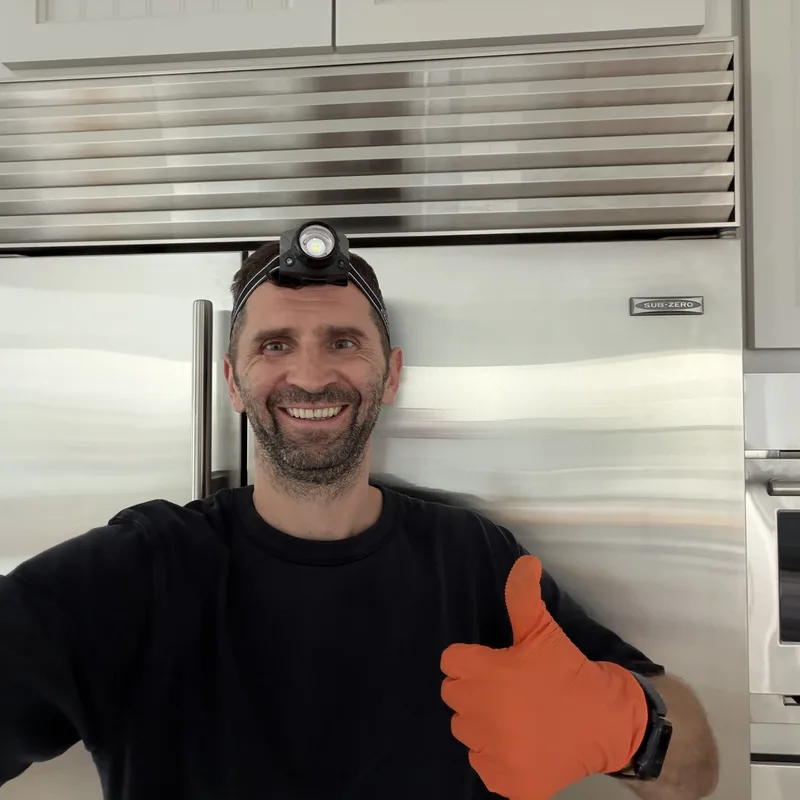
Meet the team behind every repair.


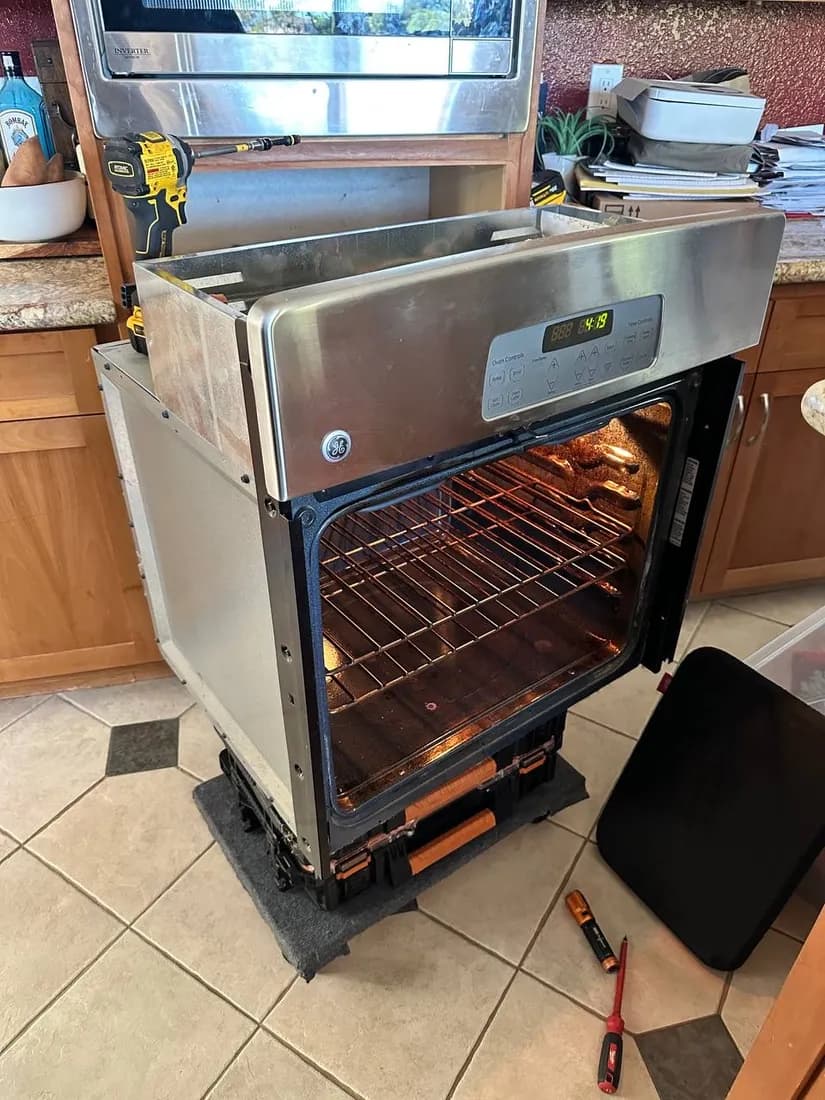
Gas or electric, range or wall oven, we know the platform.
The oven problems we fix most.
Oven Won't Heat at All
The call we get most. On an electric oven it's almost always the bake element — when it fails it usually stops heating and sometimes shows a break or a blistered spot. On a gas oven it's the igniter: it should glow bright and light the burner within about 90 seconds; when it weakens, it glows but never gets hot enough to open the gas valve. Both are common, affordable parts — we confirm which before quoting.
Cooktop Works but the Oven Doesn't
The burners light fine but the oven stays cold. On a range that split points straight at the oven side — the bake element or igniter and its own safety valve — not the cooktop. It's one of the most common patterns we see, and usually a same-visit fix once we isolate the oven circuit.
Runs Hot, Runs Cold, Bakes Uneven
Cookies burn on one rack and stay raw on another, or the oven never matches the dial. Usually it's a drifting temperature sensor feeding the board a bad reading, a tired convection fan, or a thermostat that's lost calibration. We verify the real cavity temperature with our own probe before trusting the panel.
Died Right After a Self-Clean Cycle
This is the one nobody expects. The self-clean cycle runs the cavity past 800°F, and that heat regularly cooks the oven's own thermal fuse, temperature sensor, or control board — so the oven works during cleaning and is dead the next morning. We replace what the heat killed, and we'll tell you honestly: skip self-clean and wipe it down instead.
Broiler Won't Fire
Bake works but the broiler stays cold — a burned-out broil element up top, or a control relay that isn't switching it on. We test the element resistance and the board output so we replace the part that actually failed, not both.
Self-Clean Door Locked Shut
The door latch motor fails mid self-clean and the oven locks itself closed. We release it safely and replace the latch — without forcing the door, which bends the mechanism and turns a small fix into a big one.
Dead Display or Error Code
A blank touchpad, an unresponsive panel, or a flashing F-code. It can be the control board, a loose ribbon cable, or a blown fuse behind the panel — and on many models a stuck-on code is the board flagging the temperature sensor. We read it at the board with a meter instead of guessing from the blink.
What you get on every oven call.
No two oven jobs match — an igniter, a temperature sensor, and a control board are different work and different parts. Rather than hide that behind a flat number, here's what's the same on every oven repair San Diego homeowners book with us.
Five quick checks before you call.
A few oven scares clear up in a few minutes. Run these first — if it's still cold, off-temperature, or throwing a code afterward, that's a real repair and we're a call away.
Reset both breaker legs (electric)
An electric oven runs on 240 volts — two breaker legs. If the oven is dead or only warms slightly, one leg may have tripped. Flip the oven's breaker fully off, then back on. No change means the heat circuit or board needs a meter.
Watch the gas igniter glow (gas)
Turn the oven to bake and watch the igniter through the bottom vent. A healthy one glows bright orange and lights the burner within about 90 seconds. If it glows dull, or glows but never lights, the igniter is weak — that's the most common gas-oven repair there is.
Check the real temperature
If baking is off, hang a cheap oven thermometer on the middle rack, set 350°F, and give it 20 minutes. If it reads far from 350, the sensor or thermostat has drifted — a fixable miscalibration, not a dead oven.
Skip the self-clean cycle
If your oven quit right after self-cleaning, that's almost certainly the cause — the cycle's extreme heat kills fuses and boards. Going forward, don't run it; a warm-water wipe-down does the job without risking a repair bill. (And never line the bottom with foil — it traps heat into the element.)
Make sure the door shuts tight
A door that won't seal — bent hinge, worn gasket, tired spring — lets heat escape and throws the temperature off. Check that it closes flush and the gasket isn't torn. A bad seal looks exactly like a heating problem.
What's behind my oven's error code?
Most newer ovens flash a code when they fault. Here are the common ones across San Diego kitchens — and how many of them come back to the temperature sensor.
| Brand | Code | What it means & first step |
|---|---|---|
| Samsung | won't heat past ~175°F, E-08, C-d0 | A Samsung oven that climbs to roughly 175°F and stalls is the classic — usually the temperature sensor or a control fault, not the element. E-08 points to a fan or heating fault and C-d0 is a stuck door/lock. We meter the sensor before touching the board. |
| Whirlpool, KitchenAid & Maytag | F2, F3, F5 | F2 is an over-temperature or runaway reading, F3 / F4 a temperature-sensor (RTD) fault — open or shorted — and F5 a door-latch fault. These platforms lean hard on the sensor, so it's the first thing we test. |
| GE | F7, F2, beeping codes | F7 is a stuck or shorted keypad/membrane, F2 an over-temp reading. GE ovens chirp the code on the display; we confirm at the control board and the sensor rather than guess from the beep. |
| LG & Frigidaire | F-codes, sensor & relay faults | LG (F-codes) and Frigidaire lean on temperature-sensor and control-relay faults, with the occasional element or igniter behind them. We read the code, test the flagged component, and confirm before anything's replaced. |
What fails, by brand — and what the fix takes.
Every oven platform has its weak spot. Here's what we pull apart most in San Diego oven repair, from mass-market ranges to built-in wall ovens.
Samsung — "Not Heating" & Sensor Faults
A Samsung oven not heating — or one that stalls around 175°F — usually traces to the temperature sensor or a control fault rather than the element itself. It's a well-known Samsung pattern, and metering the sensor first saves you an unnecessary board. Samsung oven repair in San Diego is a regular call for us.
Whirlpool, KitchenAid & Maytag — Elements & RTD Sensors
These share a platform: a KitchenAid or Whirlpool oven not heating is usually the bake element, and the F3/F4 sensor (RTD) fault is the other regular. Element plus sensor is the standard, durable fix on these ranges and wall ovens.
Frigidaire & GE — Igniters, Elements & Boards
Frigidaire gas ovens lean on igniter wear; the electric models and GE units run to bake elements and the occasional control-board or keypad (GE's F7) fault. We confirm the element and igniter before the board, which is the costly part.
LG — Elements, Sensors & Convection
An LG oven not heating or baking unevenly tends to be the bake element, the temperature sensor, or the convection fan and its element on convection models. The code usually aims us at the part, so the diagnostic moves fast.
How an oven repair goes.
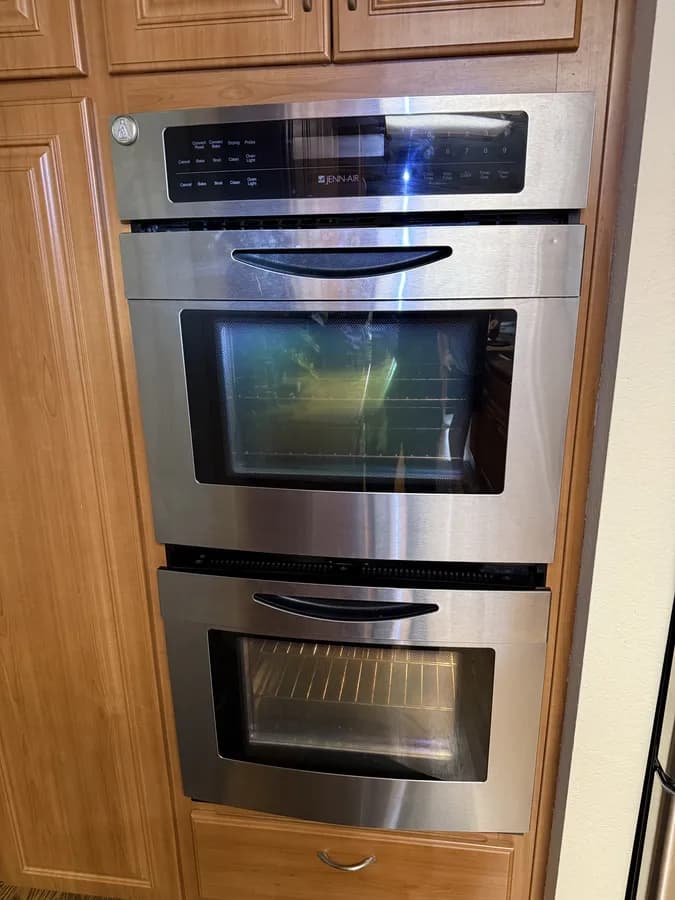
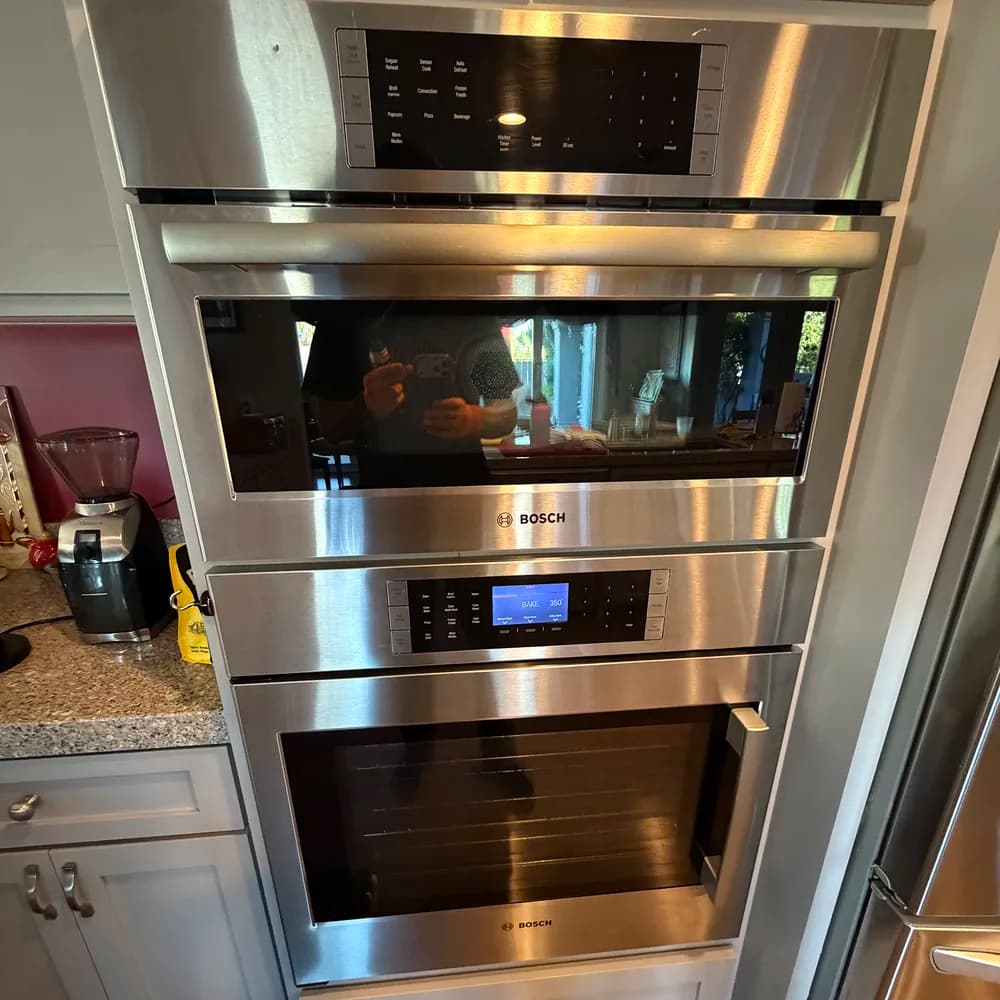
From cold oven to fixed, in four steps.
Tell us gas or electric, and what it's doing
Call (858) 788-1552 or book online with the brand, whether it's gas or electric, and the symptom — won't heat, bakes uneven, dead display, locked after self-clean. Reach us before early afternoon and same-day is usually on the table.
The $90 diagnostic
Your technician tests the element or igniter, the temperature sensor, the control board, and the real cavity temperature, and finds the actual cause. You get a written quote first, and the $90 comes off the total once you approve the repair.
Most fixes, same visit
Approve it and we go — elements, igniters, sensors, and door latches are already on the truck. A special-order control board gets a firm follow-up date, with no second diagnostic fee.
90 days, parts and labor
The work is guaranteed 90 days, parts and labor. If the oven won't heat again from the same fault, we come back and finish it free — no new diagnostic, no parts bill.
Oven repair — straight answers.
Oven repair across San Diego County.
Other Appliances We Fix in San Diego County
Save on your appliance repair.
$20 Off Online Booking
Book your repair through our website and $20 comes off automatically — no promo code needed.
$20 Off for Seniors
A little thank-you to our senior neighbors — $20 off any appliance repair, just mention it when you call.
$20 Off for Veterans & First Responders
For those who serve — veterans, police, fire and EMS save $20 on any repair. Thank you for what you do.
Oven won't heat? Let's get dinner back on.
Same-day oven repair in San Diego, CA — gas or electric, a flat $90 diagnostic credited toward the repair, and the common parts on the truck. Locally owned and run, so you get a real technician who tells you the cheap part from the expensive one, not a parts-swapper testing theories on your bill.