Wine Cooler Repair in San Diego
A wine cooler drifting warm puts a whole collection at risk — and most faults, on both compressor and thermoelectric units, come down to a single serviceable part: a fan, a sensor, a relay, a module, or a door seal. We run same-day wine cooler and wine fridge repair in San Diego, CA on built-in and freestanding units, with the exact part and price in writing before any work. Flat $90 diagnostic, applied to the repair. 90-day guarantee on parts and labor.
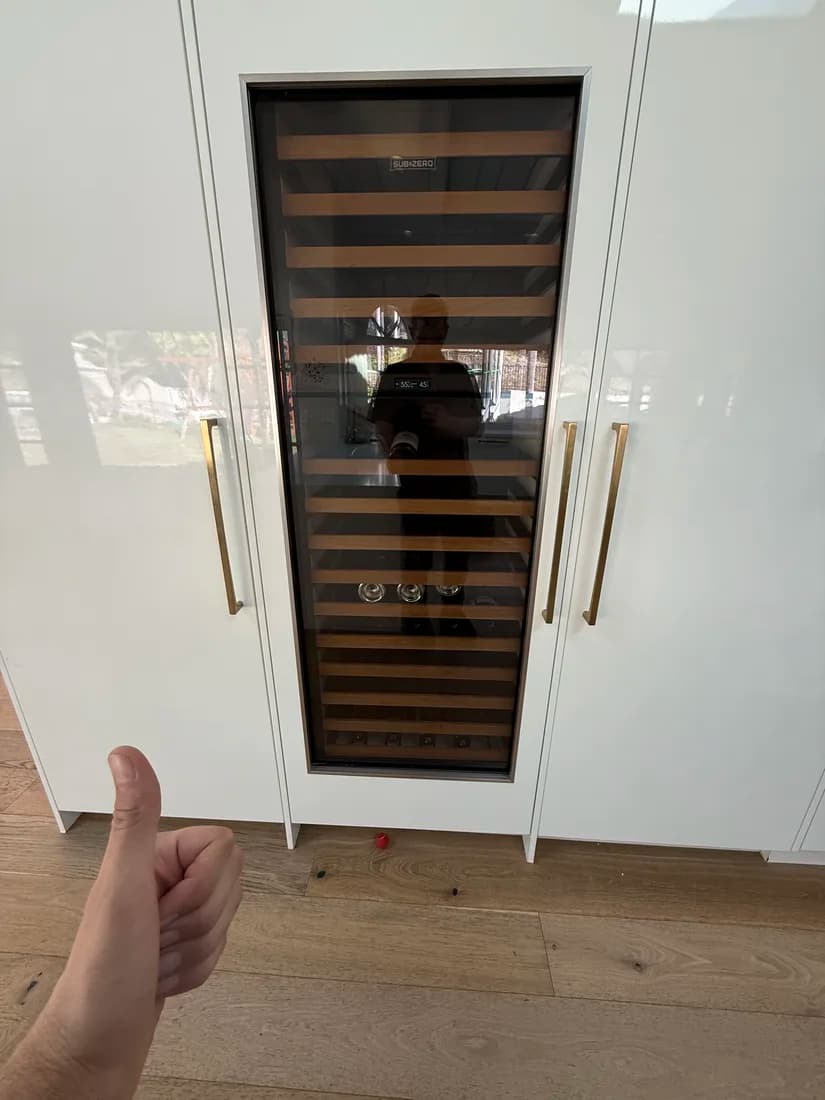
Meet the team behind every repair.
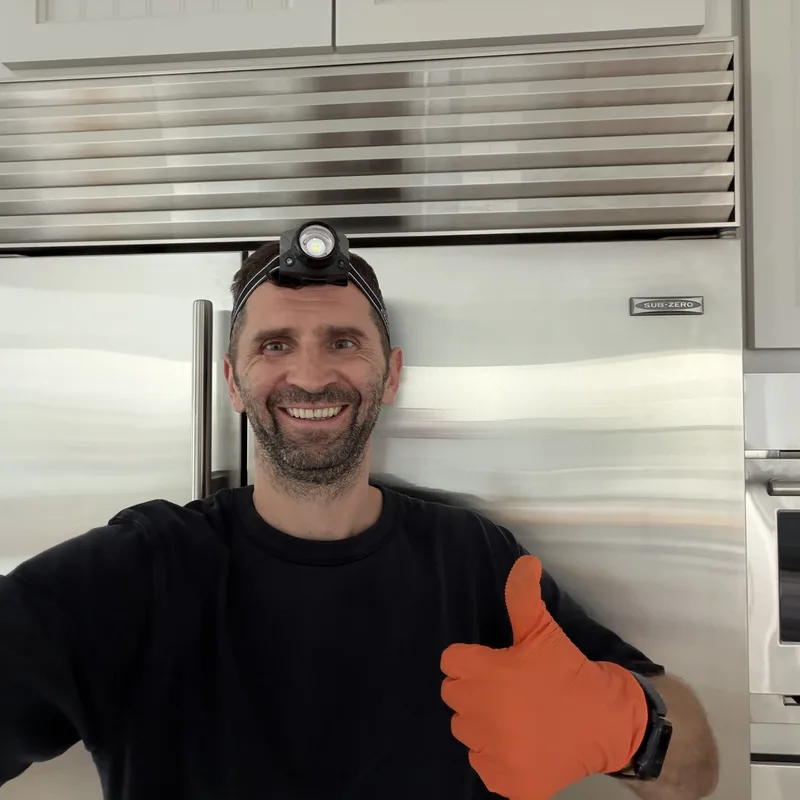


The wine cooler problems we fix most.
Not Cooling, or Drifting Warm
The call that matters most — a cooler holding 60°F instead of 55°F is slowly cooking the collection. On a compressor unit it's usually the sealed system, the compressor or start relay, or a fan; on a thermoelectric unit it's the Peltier module or its fan. The first thing we do is identify which type you have, then put the exact part and price in writing before any work.
One Zone Warm on a Dual-Zone
On a dual-zone cooler, one compartment holding temperature while the other drifts points at that zone's fan, damper, or sensor — not the whole sealed system. We test each zone independently so you replace the part that's actually failed, not the compressor by default.
Temperature Swinging Up and Down
Readings that won't hold steady are usually a drifting temperature sensor, a failing control board, or a door seal letting warm air in — and in a built-in, poor ventilation around the cabinet. Stable temperature is the whole point of a wine cooler, so we find the cause rather than just resetting it.
Loud Buzzing or Vibration
Compressor units can develop a loud buzz from the compressor or start relay; thermoelectric and built-in units run on fans that whine or rattle as they wear. A noisy cooler also vibrates the bottles, which wine doesn't love. We isolate the source and quiet it down.
Condensation, Frost, or Pooling Water
Moisture inside the cabinet or water at the base is usually a worn door gasket, a clogged condensate drain, or humidity control that's failed. We trace it to the source — a small fix that protects both your labels and the cooler's electronics.
Won't Power On or Lights Out
A dead display, no power, or the interior LED out can be the control board, a power supply, or simply the outlet or a tripped GFCI. We trace the circuit and the controls and help you protect the bottles while it's down.
What you get on every wine cooler call.
Wine coolers come two ways — compressor and thermoelectric — and they fail very differently. Rather than hide that behind a flat number, here's what's the same on every wine cooler repair San Diego homeowners book with us.
Five quick checks before you call.
A few wine cooler problems clear up fast — and a couple protect the bottles while you wait. Run these first; if it's still warm or drifting afterward, that's a real repair.
Check the room temperature
Thermoelectric coolers can only pull the inside about 20°F below the room — so a garage or a hot San Diego kitchen in summer will leave them warm no matter what. If yours is thermoelectric and the room's hot, that's physics, not a fault. A compressor unit shouldn't have that limit.
Give a built-in room to breathe
Built-in coolers shed heat from the front; if one's been boxed into a cabinet without the vent clearance, it'll run warm and constant. Make sure the front grille isn't blocked and there's airflow as the manual specifies.
Test the door seal
Shut the door on a slip of paper — if it pulls out with no resistance, the gasket is leaking and the cooler can't hold temperature. A tired seal is a small, common fix, especially on glass doors that get opened often.
Confirm the outlet and the setting
Check it's plugged in firmly and the outlet has power — reset the GFCI or breaker. Then confirm the set temperature wasn't bumped, and that a 'demo' or 'sabbath' mode didn't get switched on. An easy save before a service call.
Give it 24 hours after a move or reset
If the cooler was just moved, leveled, or unplugged, let it sit upright and run a full day before judging — compressor units especially need time for the oil to settle and the cabinet to pull down. If it's still warm after 24 hours, that's a real repair.
Still drifting warm, swinging in temperature, or running loud? That's the sealed system, a fan, a sensor, or a module — the parts that need a meter and the panels off. Book same-day wine cooler repair in San Diego, CA with a flat $90 diagnostic: (858) 788-1552.
What does a wine cooler fault code mean?
Built-in and higher-end coolers flash a code or alarm when they fault. Here's what the common ones point to across San Diego.
| Brand | Code | What it means & first step |
|---|---|---|
| High-temperature alarm | A flashing display or beeping high-temp alarm means the cabinet has drifted above its set range — a sealed-system or fan fault on a compressor unit, a failed module on a thermoelectric one, or a door left ajar. We confirm the cause before replacing parts. | |
| Sensor / probe faults | Many coolers flash a sensor or probe code when a temperature thermistor reads open or shorted, so the control can't regulate the zone. It's a common, affordable part — we meter the sensor before touching the board. | |
| Sub-Zero & built-in service codes | Built-in units like Sub-Zero wine storage flash numbered service codes plus a condenser-cleaning reminder when the coil is dusty. These hide their parts behind panels, so reading the code right is what separates a one-visit fix from a return trip. |
What fails, by brand — and what the fix takes.
Every wine cooler platform has its weak spot. Here's what we pull apart most in San Diego wine cooler repair, from built-in columns to freestanding units.
Sub-Zero & U-Line — Built-In Compressor Units
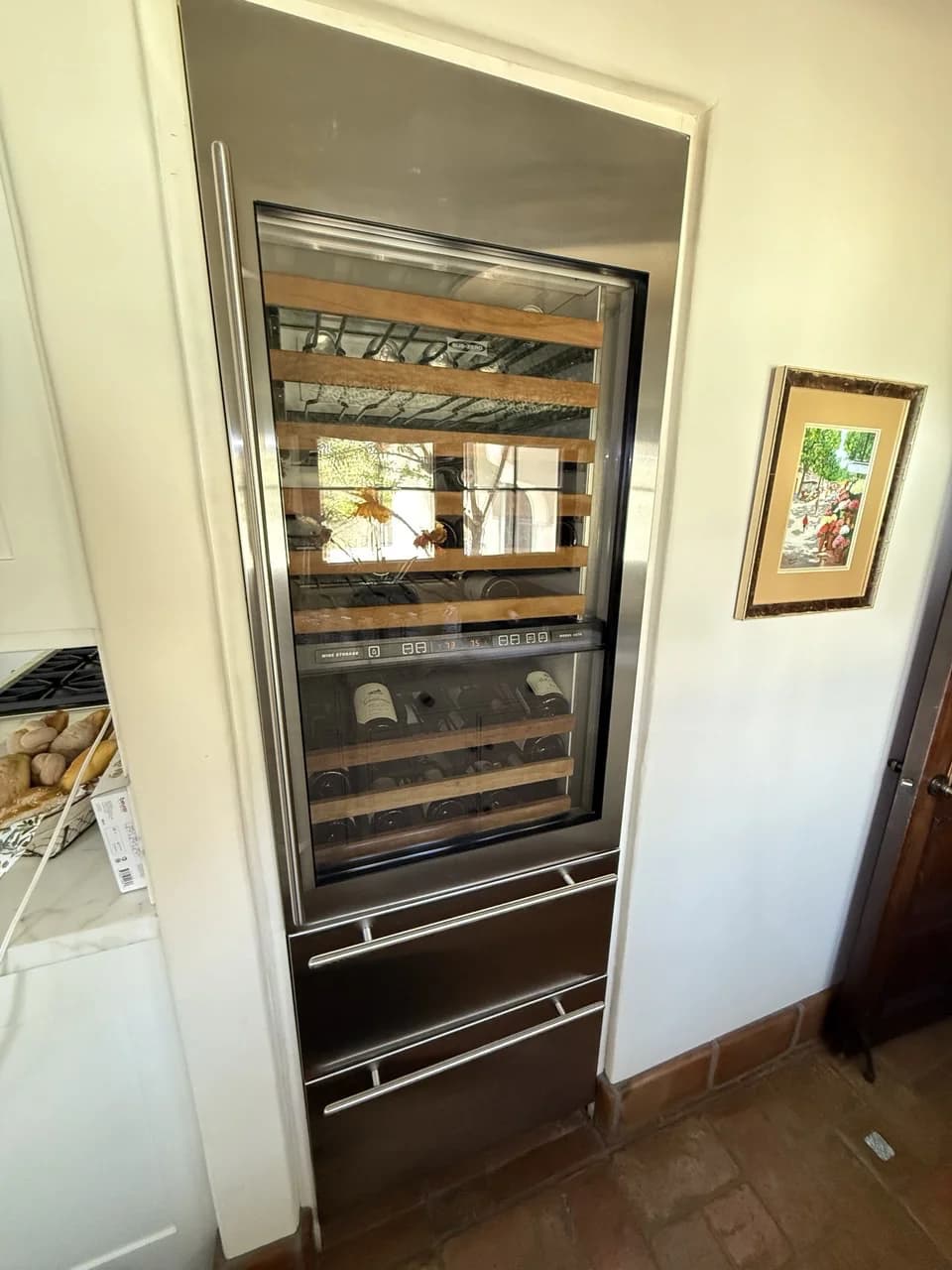
Sub-Zero and U-Line built-in wine storage are compressor units built to be serviced — sealed-system, condenser-fan, and control work, plus the door seals that wear on heavily-used cellars. These hold real collections in La Jolla and Rancho Santa Fe homes, and a repair almost always puts years back on the cabinet.
Thermador, Viking & Marvel — Premium Built-Ins
Thermador, Viking, and Marvel under-counter coolers run to compressor, fan, and electronic-control faults, with dual-zone damper and sensor issues on the larger units. Worth keeping running; part access behind the cabinetry is the only variable.
GE & Frigidaire — Compressor Freestanding
GE and Frigidaire freestanding and built-in coolers are compressor units, so a no-cool is usually the start relay, the compressor, or a fan — the same family of fixes as a refrigerator. These are generally worth repairing when the cabinet's in good shape.
Danby, NewAir & Avanti — Thermoelectric & Budget
Danby, NewAir, Avanti, and similar freestanding coolers are often thermoelectric, cooling with a Peltier module and a fan. The module or fan is a real, replaceable fix — and on every one we put the exact part and price in writing before any work, so you decide with the full picture in front of you.
Dual-Zone Coolers — Zones, Dampers & Sensors
Across brands, a dual-zone cooler with one warm zone is usually that zone's fan, damper, or sensor, not the whole system. We test the zones separately so you fix the actual fault — the cheap part — instead of replacing the compressor on a guess.
How a wine cooler repair goes.
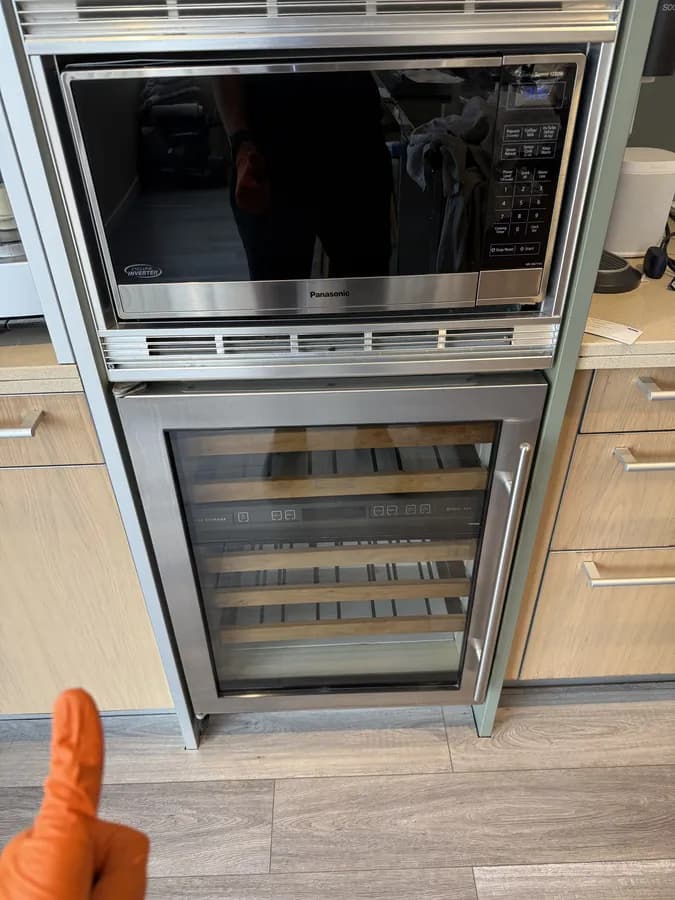
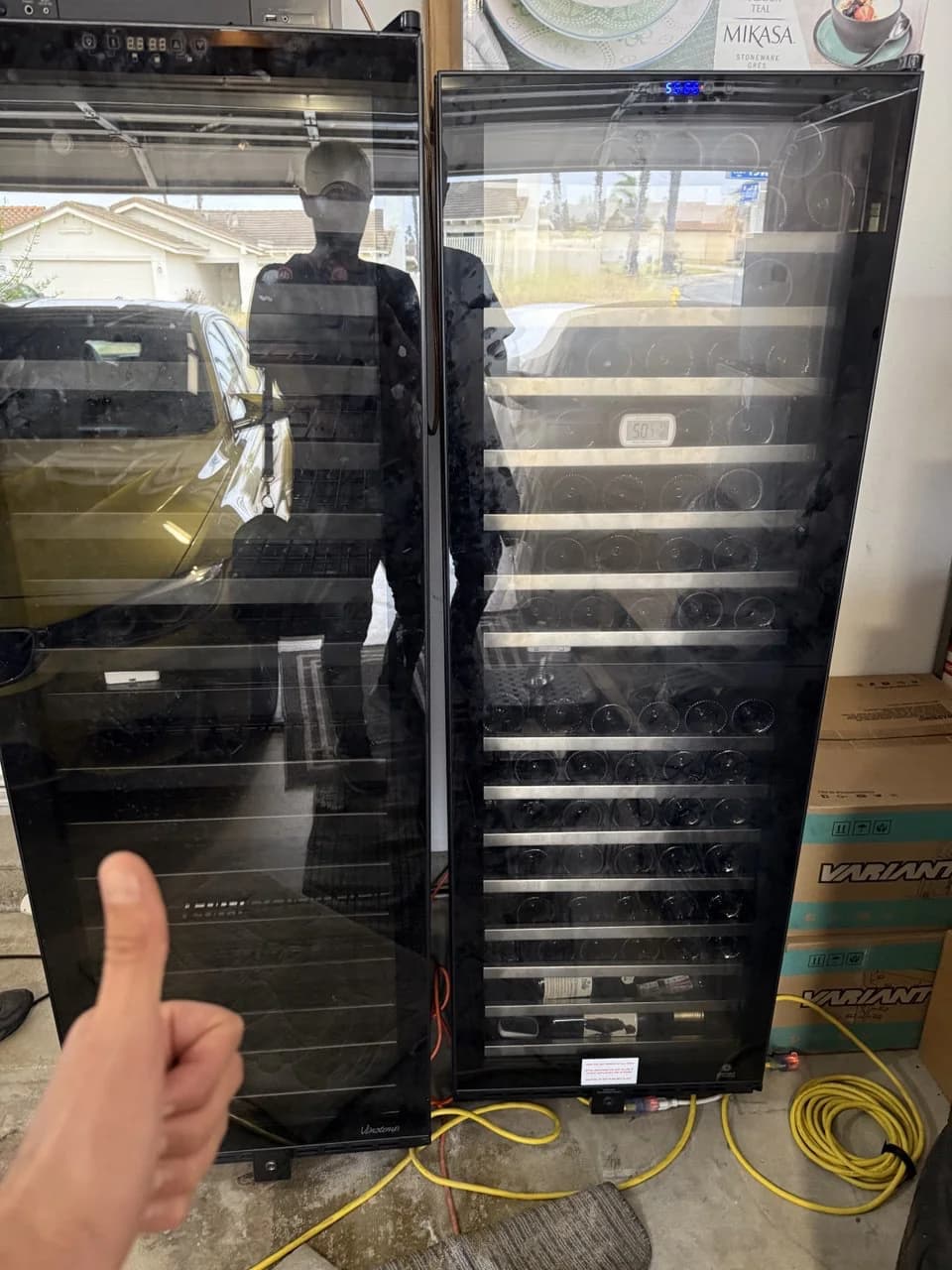
From warm cabinet to fixed, in four steps.
Tell us the type and what it's doing
Call (858) 788-1552 or book online with the type (built-in or freestanding, single or dual-zone, and the brand if you know it) and the symptom — not cooling, drifting warm, noisy, won't power on. Reach us before early afternoon and same-day is usually open.
The $90 diagnostic
Your technician identifies compressor vs. thermoelectric, then reads the sealed system or module, the fans, sensors, and controls to find the real cause. You get a written quote first, and the $90 comes off the total once you approve the repair.
Most fixes, same visit
Approve it and we go — modules, fans, sensors, start relays, and door gaskets are already on the truck. A sealed-system or compressor job gets a firm follow-up date, with no second diagnostic fee.
90 days, parts and labor
Guaranteed 90 days, parts and labor. If the cabinet drifts off temperature again on the same fault, we return free — your bottles shouldn't pay for a repair that didn't hold.
Wine cooler repair — straight answers.
Wine cooler repair across San Diego County.
Other Appliances We Fix in San Diego County
Save on your appliance repair.
$20 Off Online Booking
Book your repair through our website and $20 comes off automatically — no promo code needed.
$20 Off for Seniors
A little thank-you to our senior neighbors — $20 off any appliance repair, just mention it when you call.
$20 Off for Veterans & First Responders
For those who serve — veterans, police, fire and EMS save $20 on any repair. Thank you for what you do.
Wine cooler drifting warm? Let's protect the collection.
Same-day wine cooler and wine fridge repair in San Diego, CA — built-in or freestanding, a flat $90 diagnostic credited toward the repair, and an honest read on compressor versus thermoelectric. Locally owned and serving San Diego since 2019, so you get a real technician who weighs the fix against the bottles, not a generalist learning cooling units on your collection.