How to Clean a Dishwasher — A San Diego Repair Guide
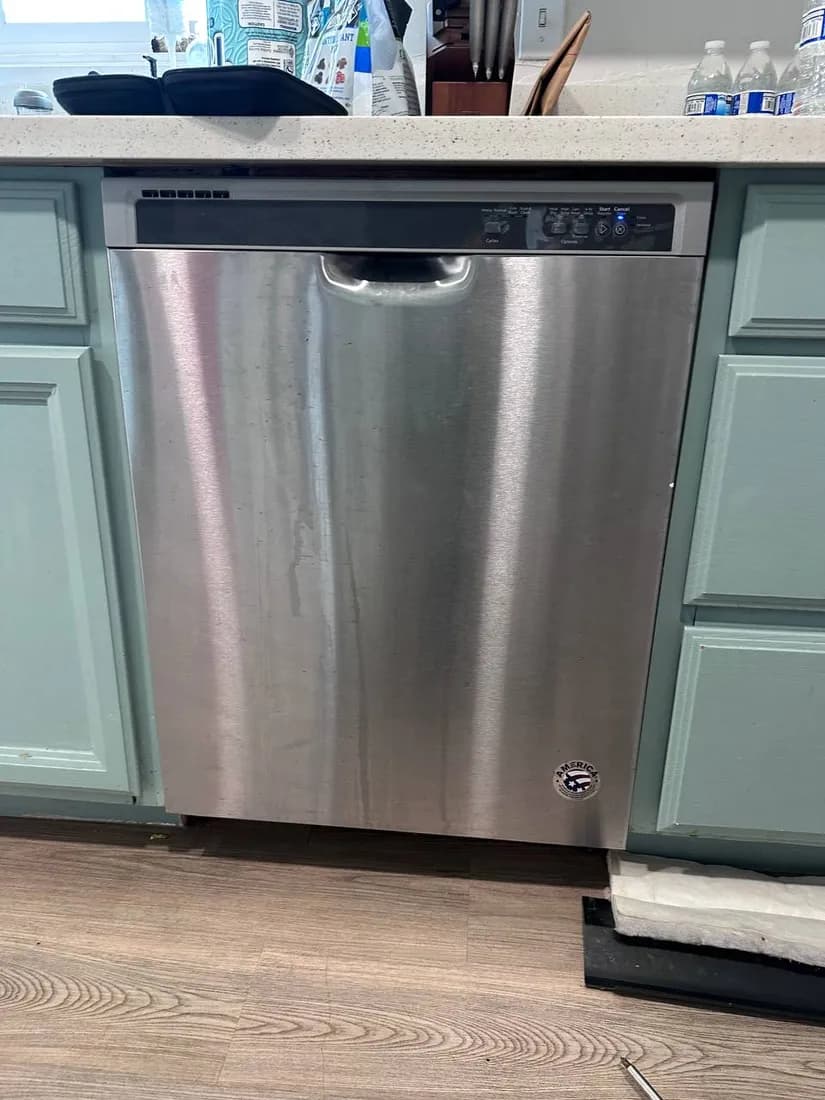
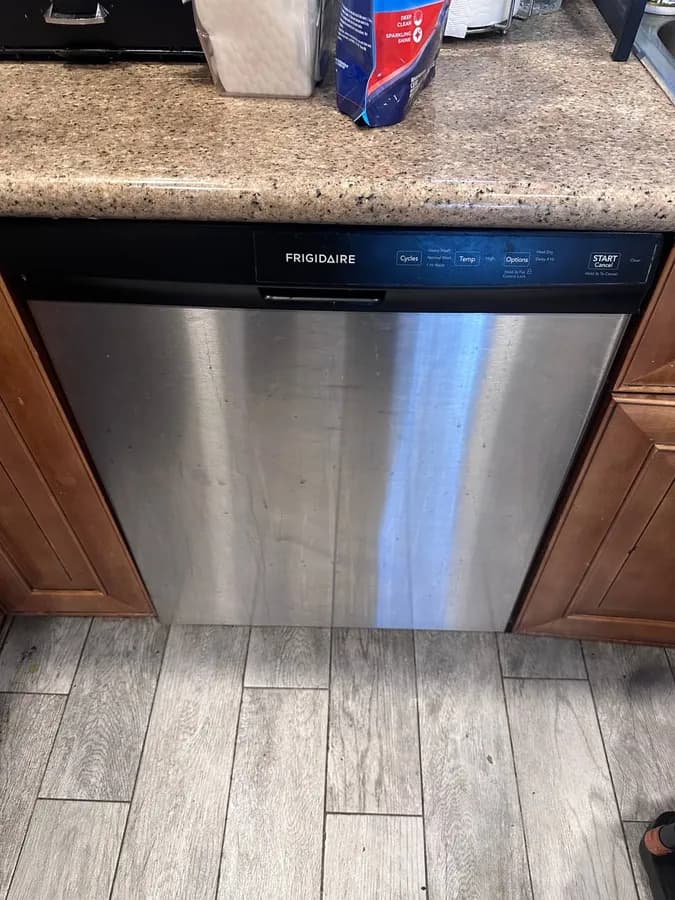
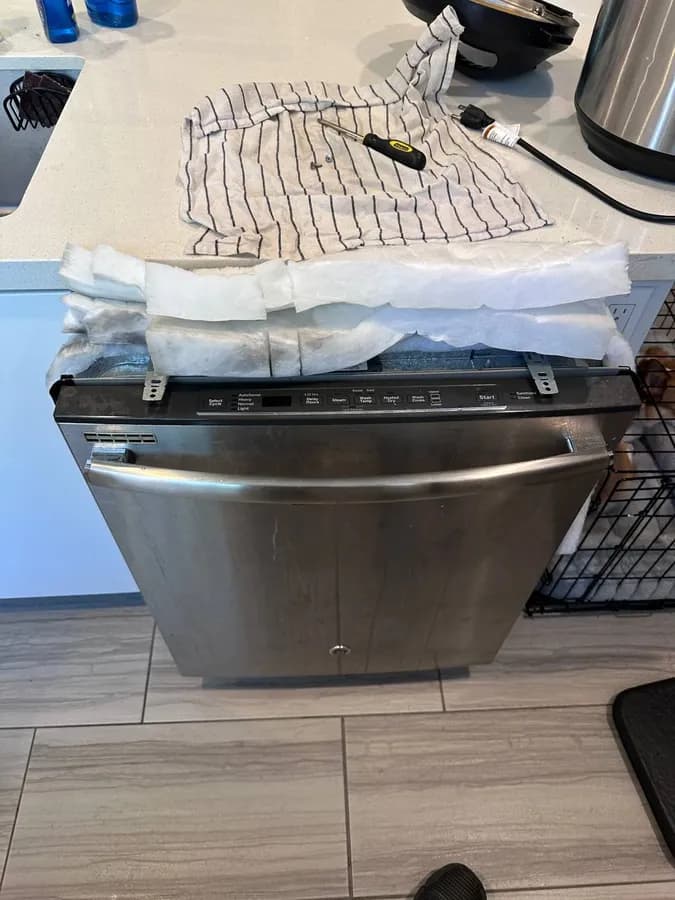
The places most dishwasher maintenance happens — the filter assembly, the spray arms, and the door gasket where debris and odors hide.
The Cheapest Dishwasher Fix Is a Cleaning
A sour whiff when you open the door, gritty glasses, a puddle lingering at the bottom — none of that necessarily means a failed part. Running dishwasher calls around San Diego since 2019, we've watched a big slice of them end with the technician doing twenty minutes of maintenance the homeowner could have done for free.
So here's the full routine, in the order that pays off fastest: filter, spray arms, door seal, an empty hot cycle, and mineral control for our local tap water — plus the symptoms that mean you should skip the scrubbing and book a repair instead. Nearly everything applies to any modern machine; quirks for Bosch, KitchenAid, and the other common brands come at the end.
No tools required. If you can slide out a bottom rack and twist a plastic cup, you're qualified.
How Often, Really?
Owner manuals are written for average water. San Diego's isn't average — it's mineral-heavy, so deposits form faster here and the intervals need tightening.
By the numbers: local tap commonly measures in the hard band of the USGS scale, carrying a couple hundred milligrams of dissolved calcium and magnesium per liter. Inland neighborhoods such as Poway often run a touch harder; the blends serving coastal La Jolla and Del Mar can be milder. Either way, plan on more frequent mineral control than the booklet suggests.
- Filter: a quick look and rinse every week or two — call it 90 seconds of effort
- Spray arms: eyeball them monthly; full nozzle clearing quarterly, sooner if glasses show white specks
- Door seal: a monthly wipe-down, with attention to the trough at the door's base
- Empty hot cycle with cleaner or vinegar: monthly
- Mineral descale: quarterly here, versus twice a year where water runs soft
- Pro check-up: annually is plenty, and it piggybacks nicely on any other service visit
The Filter: Two Minutes That Prevent Most Problems
Since roughly 2010, nearly every dishwasher ships with a filter you're meant to remove and rinse. The older machines ground food up and flushed it out; the quiet modern ones catch it instead — quieter, but the catch basket becomes your job.
A neglected filter sits behind more of our dishwasher complaints than any other single cause, and no fix is easier. Slide the bottom rack forward and find the round assembly in the tub floor near the lower arm: typically a fine-mesh cup wrapped around a coarser inner basket. Brands split between a twist-release and a straight lift-out.
How do you know the filter is the problem? Trust your nose and your glasses. A swampy smell that intensifies when the machine has sat closed overnight, or a fine grit you can feel on plates that looked clean, both point straight at a loaded filter. Even without symptoms, the visual check settles it in seconds: if the mesh looks like a tea strainer after a long week, it's due.
Warm water and an old toothbrush handle the cleaning. Nothing stiff, nothing metal — punctured mesh stops filtering, food reaches the drain pump, and a free five-minute rinse quietly becomes a pump repair.
Brand quirks worth knowing:
- Bosch 300/500/800 series: a quarter-turn releases the two-piece assembly. Hot-dry models bake film onto the mesh, so lean toward weekly rinses.
- KitchenAid KDPM and KDFE series: the filter tucks into the rear of the tub floor near the heating element — ease it out rather than yanking.
- Whirlpool and many KitchenAid units share one corporate design (chopper plus filter) — note the disassembly order and reverse it going back in.
- Miele: three filtration stages come out as a single cartridge. Owners rinse the top two and miss the micro-mesh at the base — do all three.
- Samsung and LG: a single twist-out cup, plus a small rubber flapper nearby that likes to trap food — glance at it while you're down there.
Spray Arms and San Diego Scale
Wash quality is really spray-arm quality. The arms spin on center hubs and fire water through rows of tiny drilled openings — and as the narrowest points in the whole water path, those openings are where mineral scale closes in first.
Around here, that's the usual story behind cloudy glassware, a limp spray seen through the door glass mid-cycle, or one corner of a rack that never comes clean — even with a spotless filter and a healthy pump.
The routine:
Skip the aggressive lime products made for coffee machines and bathrooms — repeated exposure embrittles dishwasher plastics and attacks the seals. Vinegar works slower but safer.
- Pop off the bottom arm — most release with a counterclockwise turn, some with a snap-in hub.
- Do the top arm as well; a clip or a central screw usually holds it.
- Backlight each arm and sight through the openings.
- Push out blockages with a toothpick or bamboo skewer; metal picks score the openings and invite faster re-clogging.
- Badly scaled? Rest the arm in a bowl of white vinegar for half an hour — the deposits dissolve without the plastic suffering.
- Rinse well, click everything back on, and give each arm a spin by hand to confirm free movement.
The Door Seal and the Trough Nobody Wipes
The loop of rubber sealing the door collects soap scum and food film, but the real offender lives lower: the shallow horizontal trough along the base of the door. The wash cycle can't rinse what sits outside the tub, so whatever lands in that trough stays.
A damp microfiber over the seal once a month is enough; for gunk in the folds, dip a toothbrush in equal parts vinegar and water. Keep chlorine bleach away from door seals — it ages the rubber well ahead of schedule.
About that trough: open the door flat and run a finger along the strip at the base of the inner panel. Dampness and grime there? Found your mystery smell. A weekly dry-wipe of that strip does more for odor than any product you can pour into the machine.
The Empty Hot Cycle: Pick Your Cleaner
With the parts clean, flush the machine itself — tub walls, hoses, sump — by running it hot and empty with something working in the water. Three options, cheapest first:
Vinegar plus baking soda covers a normal household. Kitchens that cook heavily can develop a protein film vinegar won't cut — that's the case for the boxed cleaner. Any of the three works; monthly consistency is what actually matters.
One companion habit while you're at it: keep the rinse-aid reservoir filled. In hard water, rinse aid is less a luxury than a scale-management tool — it helps water sheet off dishes and interior surfaces instead of drying into mineral spots, which means less film for your monthly cycle to strip. Most dispensers hold a month or two of supply and have a small window or indicator showing the level.
- The vinegar route (counters minerals): stand a bowl holding about a cup of white vinegar upright in the top rack and run hot, machine otherwise empty.
- The baking-soda route (counters grease and smell): scatter half a cup over the tub floor and run a short hot wash.
- A commercial dishwasher cleaner (for the toughest buildup): follow the packet's cycle instructions.
Mineral Control, Neighborhood by Neighborhood
Hardness varies block to block: inland readings trend higher, coastal blends milder. As a working rule for the county, a quarterly descale keeps performance from sliding.
You're overdue when:
Buy descaler made for dishwashers, full stop. Espresso-machine and industrial products are formulated hotter than dishwasher seals tolerate. Several brands sell their own powder tuned to the machine — and on a unit under warranty, using the blessed product protects the coverage.
If yours has a salt reservoir for a built-in softener — Miele and various built-ins do — keep it fed. An empty reservoir means the softener is offline and scale is accumulating everywhere at once. Expect refills every month or two on local water.
- Glassware comes out hazy or spotted
- A chalky coating shows on the tub interior
- Spray feels weak even with freshly cleared arms
- Flow-related error codes appear, clear, and return
Brand-Specific Maintenance That Matters
Past the universal routine, a few brands reward specific attention. The ones we service most:
Done all of it and the machine still acts up? Then you're past maintenance and into parts — pump, valve, sensor, or board. That's what the flat $90 diagnostic is for: it names the component, applies as credit toward the repair if you proceed, and the work carries a 90-day guarantee.
- Bosch: check the salt reservoir level monthly on models that have one, and run a machine-care cleaner each quarter. Once a year, have the drain-pump impeller area checked — glass fragments quietly collect there.
- KitchenAid built-in and panel-ready models: inspect the chopper-blade area at the bottom center each year for glass or hard-food fragments. The auto-cleaning feature only handles soft food, so hard pieces build up regardless.
- Whirlpool: same chopper-and-filter design as many KitchenAid units; rinse the filter regularly and check the lower spray arm for clogged nozzles.
- Thermador: shares its core design with Bosch, so follow the same schedule — monthly salt check (where fitted) and a quarterly cleaner cycle.
- Miele: run the recommended cleaner monthly, refill the salt reservoir when the indicator lights, and on units with assisted-open drying check the door-hinge dampers once a year — they wear faster with frequent door openings.
- Samsung and LG: keep the single filter cup rinsed and wipe the lower door channel weekly; these units are prone to odor if that channel is ignored.
Quick maintenance checklist
- Weekly: filter rinse after big cooking days; dry the door-base trough.
- Monthly: seal wipe-down; an empty hot cycle with cleaner or vinegar.
- Quarterly: nozzle clearing on both arms; a descale pass for local water.
- Yearly: a drain-intake check if reachable — or fold an inspection into any service visit.
Symptoms That Mean a Part, Not a Cleaning
Everything above done and the trouble persists? Then a component is asking for attention. Book a visit for:
All of it is fixable — the hard part from the kitchen floor is telling maintenance problems from mechanical ones. The $90 diagnostic draws that line for you; if it turns out to be something a brush could have handled, we'll say so, and the fee still credits toward any repair work. Wondering what different fixes tend to run? See our San Diego appliance repair cost breakdown.
- Standing water that returns even though the filter and drain hose are clear — drain-pump or check-valve suspects.
- A musty smell that outlives a full cleaning — often the drain loop or the sump area, beyond easy reach.
- Codes that reappear after multiple resets — sensor or control-board territory.
- A full cycle that still leaves dishes dirty despite cleared arms and a clean filter — pressure, heating, or dispenser faults.
- Drips from the door or from underneath — seal, hose, or pump-seal wear.
- New, louder operation — bearings or the impeller wearing down.
The Long View
Consistency is the whole secret. Quality built-ins routinely sail past the ten-year mark when the filter-arms-seal routine actually happens — and decline startlingly fast when it doesn't, because scale and wear feed on each other.
Starting today costs fifteen minutes: rinse the filter, wipe the seal and the trough, send a vinegar cycle through. That quarter hour, repeated monthly, is the difference between a machine that quietly works and a service call you didn't need.
There's a budget angle too. The parts that fail early on neglected machines — drain pumps chewed by debris that slipped past torn mesh, seals cooked by chemical shortcuts — sit in the middle of the repair price range, while the preventive routine above costs pantry staples. Ten minutes a month is cheap insurance against exactly the repairs homeowners resent paying for most.
And if a question comes up about your specific unit — or symptoms survive the full routine — call us. We service every major dishwasher brand across coastal and central San Diego: La Jolla, Del Mar, Carmel Valley, Mira Mesa, Poway, and the surrounding areas.
Dishwasher Upkeep — At a Glance
- Filter: Rinse every week or two — weekly on hot-dry models
- Spray arms: Quarterly nozzle clearing; a vinegar bath when scaled
- Door seal & trough: Monthly wipe — the door-base trough causes most odors
- Empty hot cycle: Monthly, with vinegar, baking soda, or a boxed cleaner
- Mineral control: A quarterly descale in local hard water
- Book a repair: Pooling water, returning codes, or leaks — (858) 788-1552
Related Reading
When the problem outruns a cleaning, start with these.
Smells, residue, or leaks that survived the full cleaning routine mean a component needs attention — and that's our department. We cover coastal and central San Diego, often same-day when you reach us before noon. Call (858) 788-1552 or book through the site.
(858) 788-1552