How to Clean a Dryer Vent — A San Diego Repair Guide
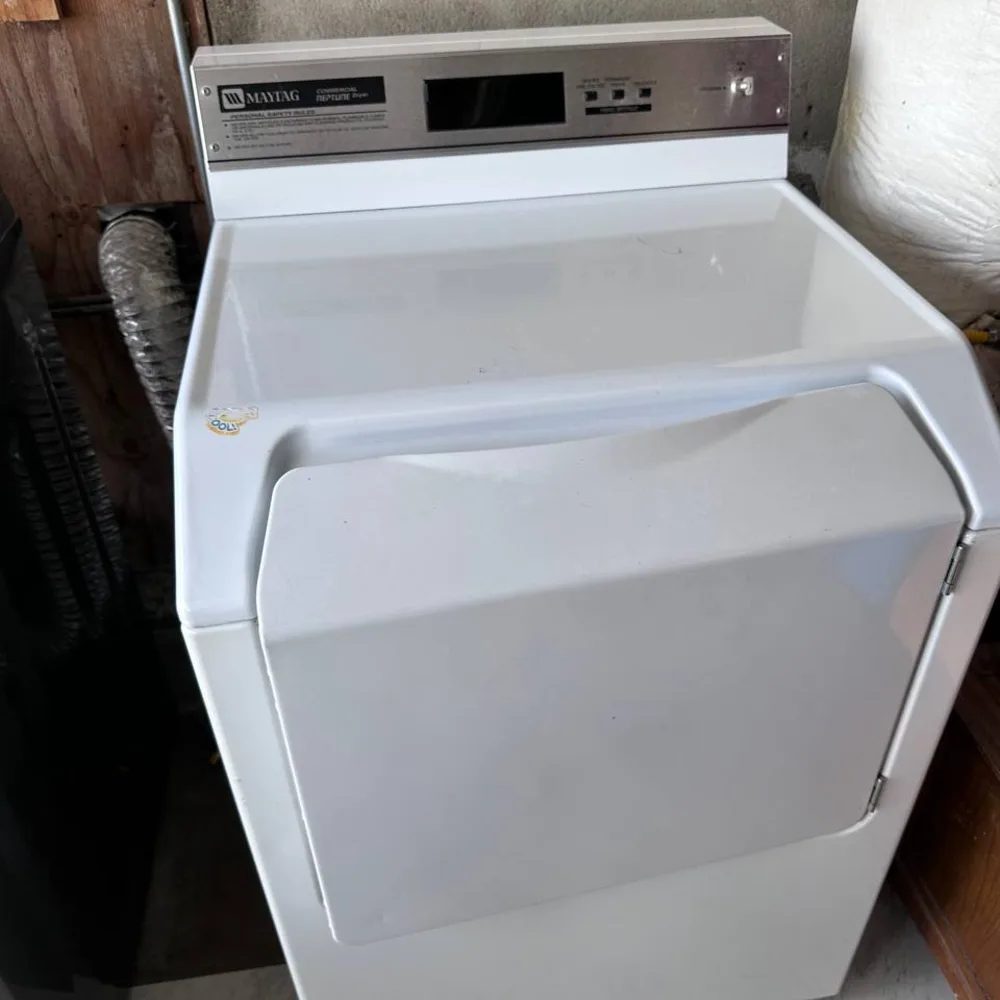
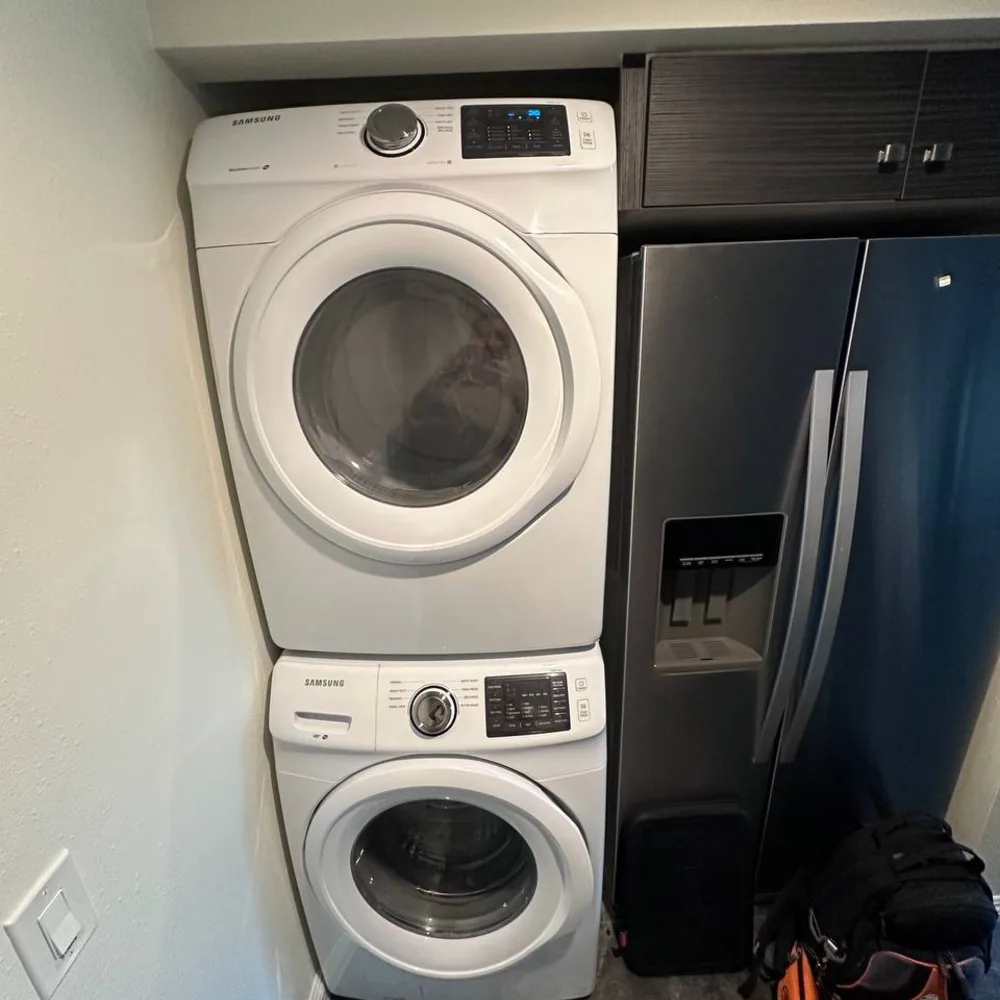
The two ends of every dryer vent: the exhaust port behind the dryer and the exterior hood. Most of the lint hides between them.
Slow Loads Usually Mean a Choked Vent — and That's a Fire Hazard
Towels coming out damp after a full cycle? Before you blame the machine, think about the duct behind it. The lint screen only stops the big stuff; the fine fibers, pet fuzz, and softener residue sail right past it and settle inside the exhaust run between the dryer's back panel and the outside of the house. Give that a couple of years and the passage quietly shrinks.
Once drying times have roughly doubled, the duct is usually more than half blocked — and that's exactly when things turn dangerous. US fire-safety data from the NFPA ties lint-blocked dryer exhausts to around 15,000 house fires annually, with skipped cleaning the leading factor. Trapped lint sitting in starved, overheated airflow is about the easiest tinder a house can produce.
The encouraging part: in most homes this is a DIY-able chore with cheap tools. Below is the safe way to do it, an honest schedule (hint: the once-a-year rule isn't universal for everyone), and the handful of setups where hiring it out genuinely beats climbing around yourself. Slow dryers are one of the most frequent complaints we handle across coastal and central San Diego, so this guide is written from real service calls.
Signs the Duct Is Closing Up
Restriction creeps in gradually, so judge by clusters, not one-off events. Two or three of the following together on a vented machine means the duct is due:
Own a ventless heat-pump machine (many newer Samsung, LG, and Bosch models)? There's no outdoor duct to block, so these signals read differently — skip ahead to the heat-pump section below for what to check instead.
- Loads that once finished in 50 minutes now need an extra half hour
- The cabinet already feels hot ten minutes into a cycle
- A scorched-lint smell hanging around while the machine runs
- Fluff collecting behind the dryer or gathering around the outside hood
- An exterior flap that barely lifts while the drum is turning
- Air noise inside the duct but only a weak breeze at the hood outside
The Honest Cleaning Schedule
The owner's manual says annually. Reality depends on load volume, pets, and how long the duct run is — start from these brackets and adjust:
Our shorthand: if the date of the last cleaning draws a blank, you're overdue. Around San Diego, two to four years between cleanings is common and mostly survivable — the fire-scare visits come from homes that stretched past five.
One local wrinkle worth knowing: our mild climate means garage and outdoor-closet laundry installs are common here, and those ducts often take extra bends to reach an outside wall. Every added elbow moves you one bracket earlier on the schedule above.
- A couple of loads a week, no animals, short duct: every year and a half to two years
- Family-volume laundry plus a shedding dog or cat: yearly
- Laundry running daily, several pets, long-haired household: twice a year
- Rental units and shared machines: every four to six months
- Anything venting through the roof: yearly at minimum, whatever the volume
What to Buy (and What to Skip)
Skip the professional rigs. A flexible brush-rod kit from the hardware store, a household vacuum with a hose, a screwdriver, and a flashlight will handle a normal home — the whole kit costs a fraction of one service visit. Drill-driven rod kits chew through packed buildup faster; a hand-twist kit is plenty for a yearly pass on a shorter duct.
The one warning we give everyone: don't make a shop-vac do the whole job. Fine lint packs its filter within minutes, and a choked shop-vac motor running hot becomes its own hazard. Brushing is what actually cleans — the vacuum's role is collecting the debris afterward.
For stretched-out ducts of 25 feet or more, where rods run out of reach, a leaf blower on its lowest setting, aimed in from the outdoor hood, will push the loosened lint back toward the laundry room where the vacuum can collect it.
Two small materials notes while you're at the store. If any duct joint needs re-sealing, buy UL-listed foil tape — not the fabric "duct tape" that ironically fails on ducts, drying out and peeling within a season. And never join dryer duct sections with screws: the tips poke into the airstream and become lint hooks that seed the next clog. Clamps and foil tape only.
Start Inside: The Laundry-Room End
Begin at the machine — it's ground level, no ladder involved. Budget about half an hour if you're comfortable moving the dryer.
1. Cut power and fuel. Pull the plug at the outlet. Gas machine? Turn the wall valve to closed (handle sitting across the pipe) — unplugging does nothing about the pressurized gas line behind the unit.
2. Walk the dryer out. A foot to eighteen inches gives you working room, and you usually don't need to disconnect anything to get there. Treat the braided gas connector kindly: repeated sharp flexing fatigues the metal, so move the unit as little as possible.
3. Free the duct. A screw-band clamp (a Phillips loosens it) or a push-fit ring holds it to the port on the machine's back. Loosen, slide the duct off, set it down.
4. Run the brush into the port. Feed the flexible head a few feet in, spin it — by hand or with a drill on its slowest setting — and withdraw gently. Repeat until fresh passes stop producing lint; expect a small grey mound at the opening. That mound is the whole point.
5. Vacuum the mess. Hose attachment into the port, then along the loose duct. The bulk of everything you'll remove today comes out right here.
6. Put it back together. Tighten the clamp snug — cranking it down crushes the duct and creates the very restriction you just removed. While you're back there, if the connector is the crinkly foil type and shows crush marks or kinks, upgrade it: smooth-wall aluminum outlives foil-flex many times over and resists sagging.
Then Outside: The Hood End, Where the Real Buildup Hides
More lint lives in the wall run than behind the machine. Every elbow and joint slows the airstream, and slower air drops its cargo at each turn — and the hinged hood on the outside wall catches the most of all.
Find the outlet on your home's exterior. Around here it typically sits low on the wall behind the laundry area, occasionally on a side wall, and on some houses, up on the roof. Roof vent? That's your cue to stop — hire that one out. No saved service fee covers a ladder fall.
For a wall-level outlet: remove the cover (a few screws or bent metal tabs hold it), then clean the flap and any mesh screen with a damp rag or a soft brush. A sticky, half-opening flap costs you airflow all by itself.
While the cover is off, look for uninvited tenants. Around San Diego we regularly find bird nests, wasp activity, and the occasional rodent cache packed inside vent hoods — a warm tube that exhales lint is prime real estate. Clear out any nesting material completely, and if it keeps coming back, fit a pest-rated vent guard designed for dryers (never window-screen mesh, which clogs with lint in weeks).
Send the brush in from this end and work it toward the machine, twisting on the way back out. Give it several passes. The debris you knock loose drifts down-duct toward the laundry room — collect it there with the vacuum, same as before.
Before screwing the cover back on, run a live test: someone starts a cycle inside while you hold a hand at the opening. A strong, steady push of warm air means you're done. Still weak? There's a blockage mid-run beyond DIY reach, and it's time for a pro with rotary gear.
Heat-Pump and Ventless Dryers Are Different
Heat-pump dryers skip the duct entirely: moist air loops through a cold heat exchanger inside the cabinet, the extracted water collects in a tank or runs to a drain, and the same air goes back around for another lap. Nothing exits the house, so there's nothing outdoors to scrub.
Their weak spot is a second, finer lint screen — typically hiding behind a small panel down near the floor — that protects the heat exchanger. Most owners have never opened that panel, and a packed secondary screen is the top reason these machines gradually stop drying.
Rinse it monthly in warm (not hot — sustained heat degrades the synthetic mesh) water and let it air-dry completely before it goes back in. The heat-exchanger fins themselves collect fine debris over a year and a half or two, but reaching them means dismantling half the cabinet without bending the fins — leave that one to a service visit.
Brand notes from our San Diego service runs:
- Samsung and LG heat-pump models: monthly rinse of the fine filter, reinstalled dry. Dry times still stretching after that? The exchanger side needs a technician.
- Bosch ventless units: the fine screen lives behind a side access panel — monthly attention. Drying taking twice as long as when new means the heat exchanger deserves an inspection.
- Miele heat-pump units: the pleated screen washes and reuses for the life of the machine — replace it only if it's physically damaged.
- Whirlpool and Maytag vented dryers: the standard two-end cleaning above is the whole game on these workhorses — and they're the machines we see most.
- Speed Queen commercial-grade vented dryers: the tank-like build sheds lint into the run more slowly, but these installs often carry long ducts, so keep the annual full pass. Older dial-timer models give you no electronic warning of a restriction.
Where DIY Stops Making Sense
Plenty of setups are better handed off — whenever the gear, the risk, or the hours outweigh a modest service bill:
Our rule of thumb: a dryer that stays slow after a proper vent cleaning doesn't have a vent problem anymore. Heating element, thermal fuse, moisture sensor, occasionally the motor — that's meter territory. The flat $90 diagnostic sorts out which one it is, and the fee counts toward the fix if you go ahead.
- Roof-vented systems. Hand it to the crew with the ladder and harness — the math isn't close.
- Runs past 25 feet or with several elbows. Consumer rods quit early; rotary pro rigs finish the job.
- Ducts buried in finished walls or crossing a crawl space, where finding a mid-run clog takes an inspection camera.
- A heat-pump unit still drying slowly with a freshly rinsed screen — that's a fouled exchanger, service-only.
- Buildup the brush just bounces off. Could be a crushed section or a joint that's let go inside the wall.
- Heat or a burnt smell that persists after a good cleaning: think heating element or thermal fuse, and park the dryer until it's checked.
- Any gas dryer that pops or hesitates at ignition. Gas-side work is ours, not yours — call before the next load.
What a vent-related visit costs
The vent inspection rides along inside our flat $90 dryer diagnostic — we don't line-item it separately when the duct is part of the fault. If clearing the duct turns out to be all the visit needs, the price stays that same flat $90, and any repair work carries our 90-day guarantee. For a fuller picture of what dryer work and other repairs run locally, see our guide to appliance repair costs in San Diego.
Put It on the Calendar
If you keep only one thing from this page: schedule it. A phone reminder, yearly or twice yearly per the brackets above, is the entire system. The dryers that fail dramatically on us are almost always the ones nobody had touched in three-plus years.
There's a money case alongside the safety case. A half-blocked duct forces the heating element to run far longer for every load — per-cycle energy draw can climb by a quarter to a half. Across a year of family laundry that's genuine dollars, and the mechanical toll compounds it: belts, bearings, and elements all age faster in a machine that never gets to breathe. Forty-five minutes with a brush pays for itself several times over.
Questions about a particular brand, an odd duct layout, or a machine that stayed slow after you cleaned everything? Call us. We work La Jolla, Del Mar, Carmel Valley, Mira Mesa, Poway, La Mesa, and the surrounding neighborhoods, with common dryer parts stocked on the truck for Samsung, LG, Whirlpool, Maytag, Bosch, Miele, and Speed Queen.
Dryer Vent Cleaning — Key Numbers
- How often: Every 1–2 years for typical homes; twice yearly with heavy use or shedding pets
- The kit: Flexible brush rods, a household vacuum with hose, screwdriver, flashlight
- Why bother: NFPA ties roughly 15,000 US house fires a year to lint-blocked exhausts
- The payoff: Restored airflow shortens cycles and trims the energy each load burns
- Ventless machines: Rinse the secondary screen monthly — there's no duct to clean
- Call instead: Roof vents, 25 ft+ runs, or slow drying after cleaning — (858) 788-1552
Related Reading
More upkeep and troubleshooting guides from the same crew — each written from actual San Diego service calls.
Vent's clean and the loads still come out damp? Roof-vented house? Heat-pump dryer losing ground month over month? That's us: Refrigerator and Appliance Repair, (858) 788-1552 — coastal and central San Diego, flat $90 diagnostic, 90-day guarantee.
(858) 788-1552